Make It Yourself
Faith & Nativity Christmas Mini Pie Mold Collection
A press mold that embosses a nativity scene into the dough, then seals the edges.
$9.99
- Free shipping over $40
- 30-day returns, label on us
- Ships in 1–2 business days
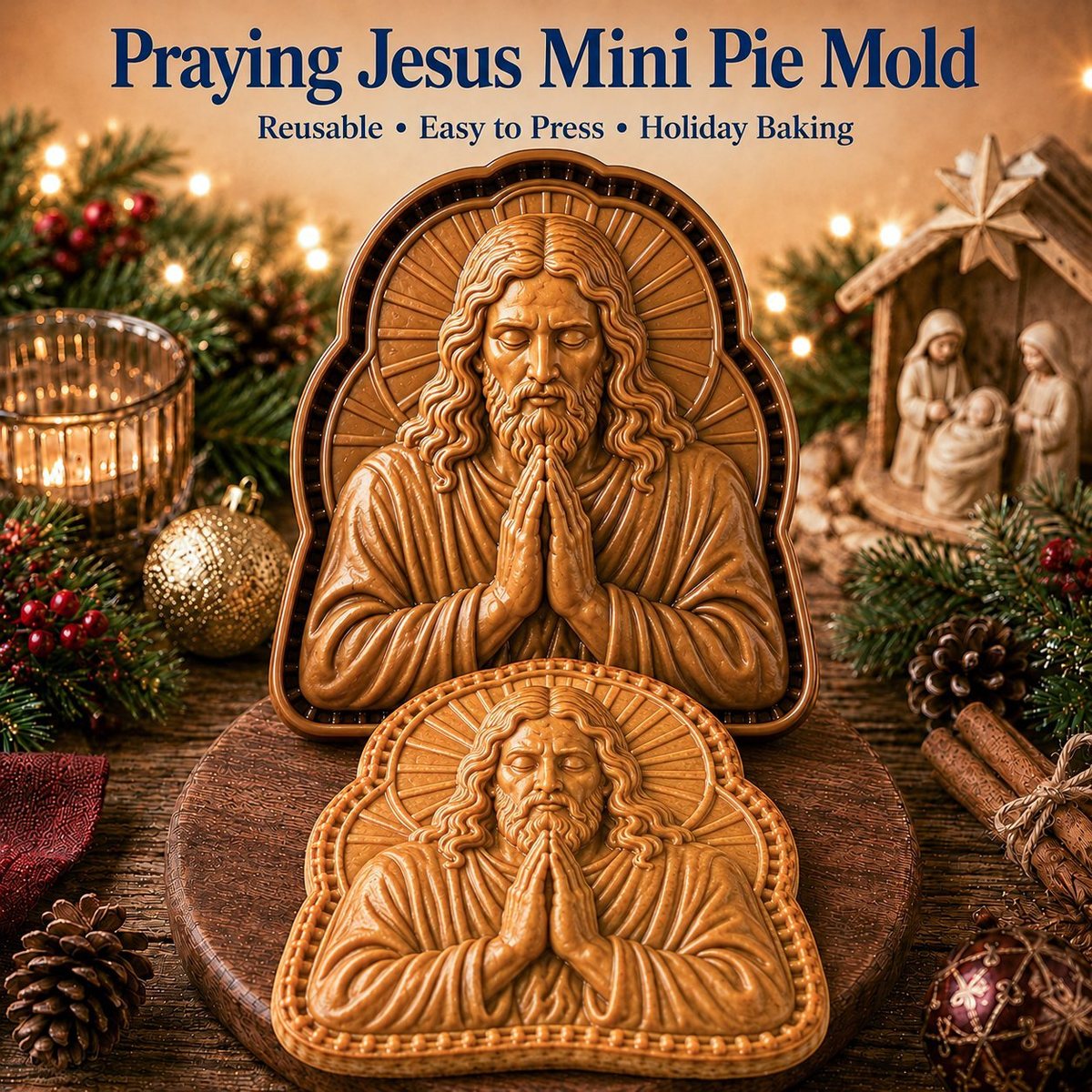
Style: Praying Jesus
- Free shipping on orders over $40
- 30-day returns, return label included
- Secure SSL checkout · PayPal accepted
- Tracked worldwide delivery
About this mold
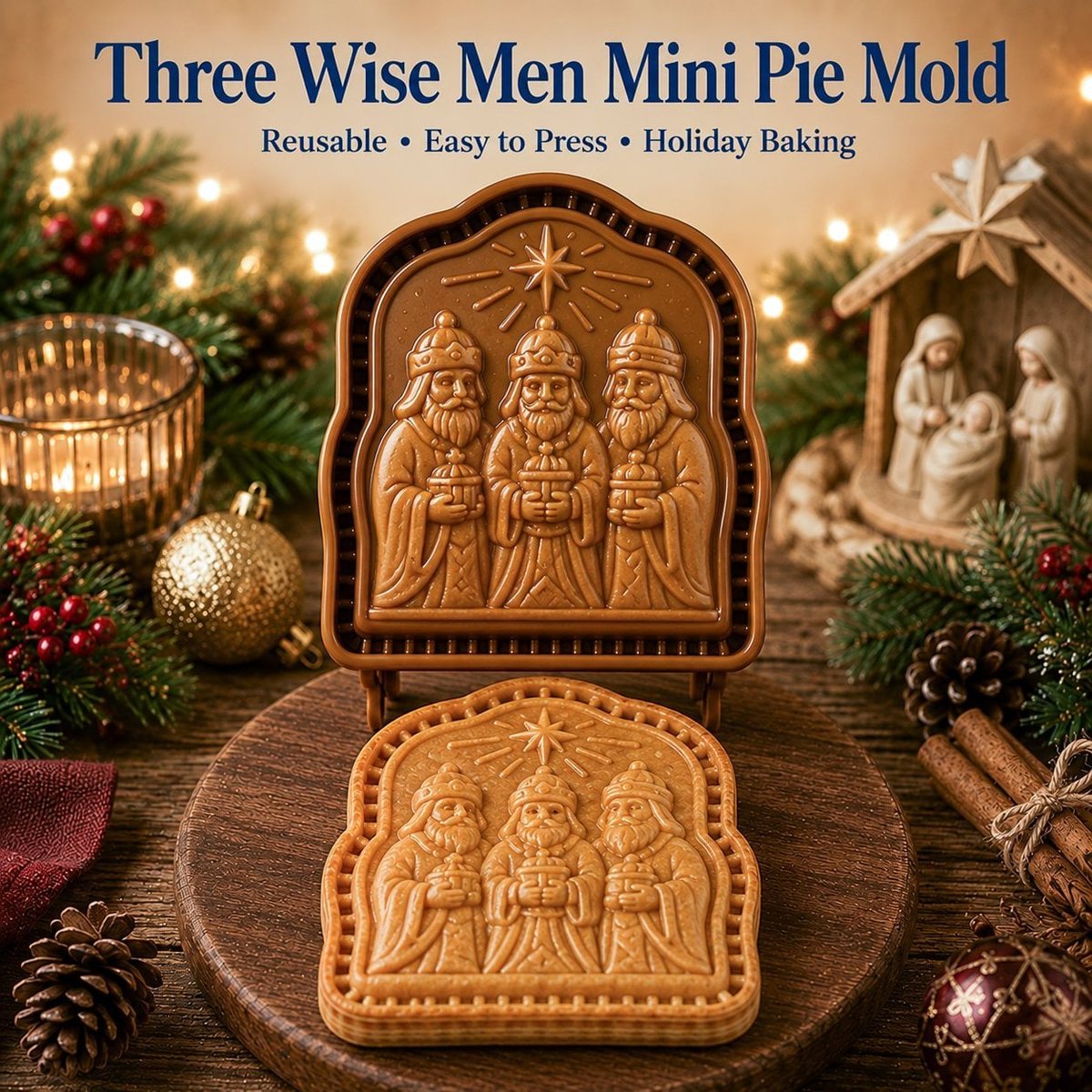
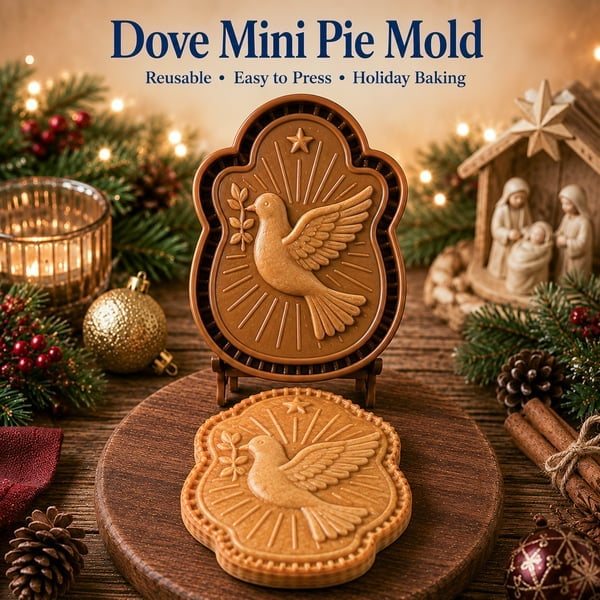
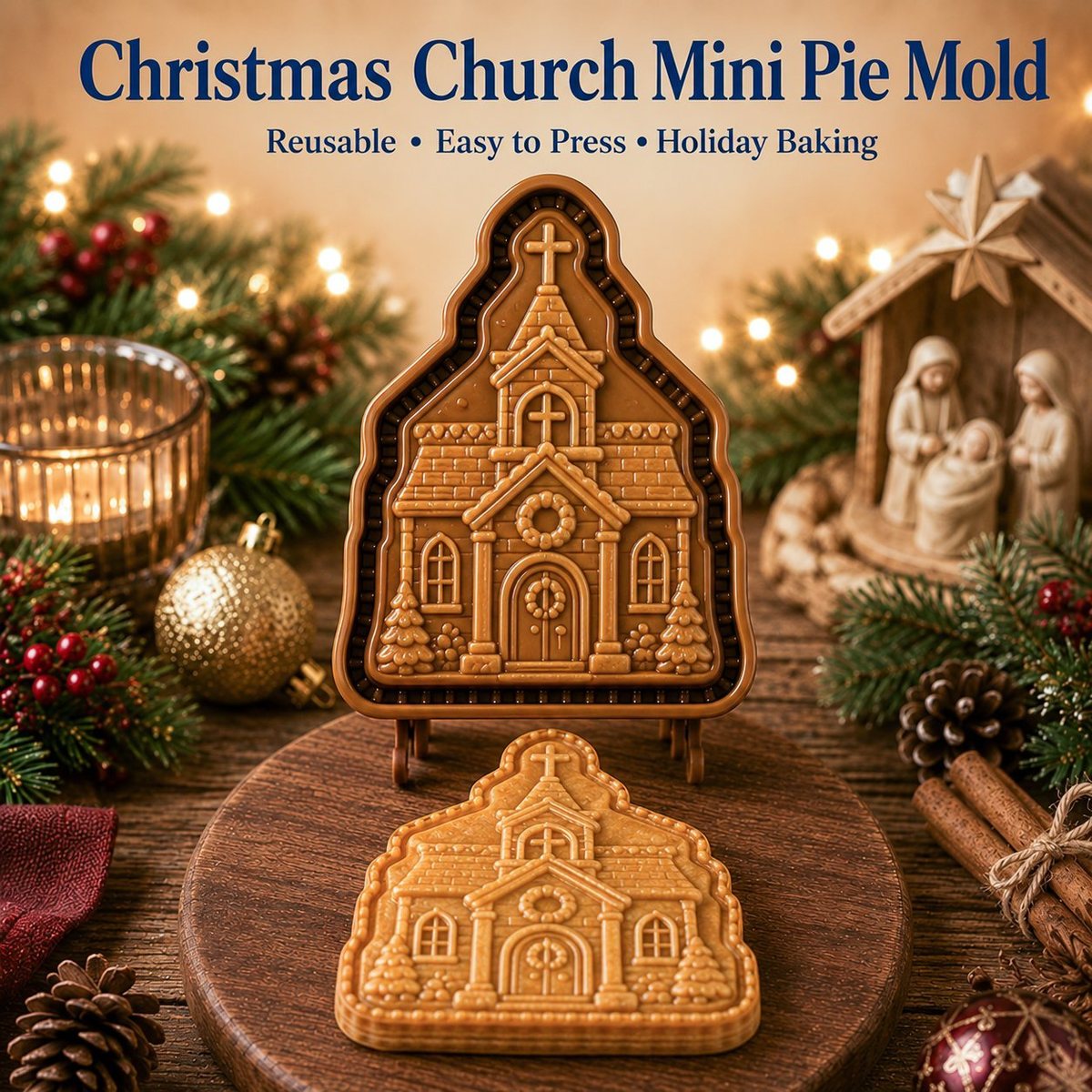
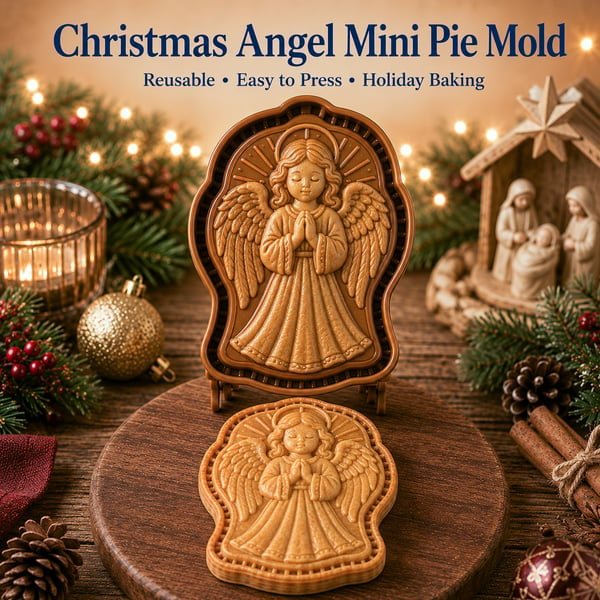
A two-part press with a shaped outer rim and an embossed inner die. You roll your dough, lay one piece over the inner die, add a little filling, put the second piece on top and press the two halves together. The raised pattern comes up through the dough on the face of the pastry and the outer rim seals the edges at the same time, so a filled mini pie comes out of the mold ready for the baking sheet. The mold does not go into the oven.
The eight designs
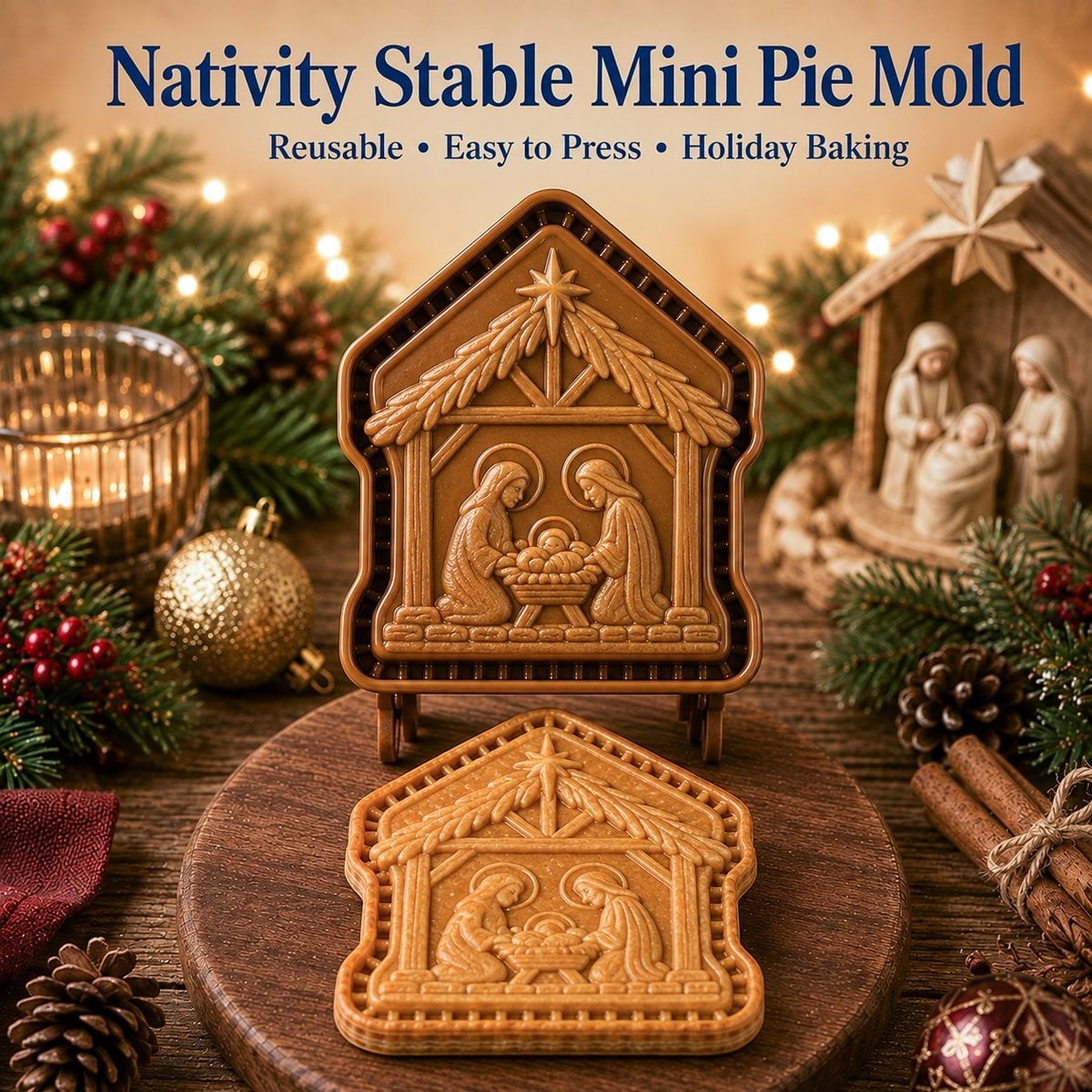
Praying Jesus, the nativity stable, the three wise men, a dove, a church, an angel, a lamb and the star of Bethlehem. The raised detail is what separates these from a plain cutter: faces, cloth, wings, branches and borders come up out of the die, so the finished pastry carries the design without piping, icing or any decorating skill at all. Mixing three or four designs on one tray gets you a dessert table that looks deliberate.
Making a filled mini pie
Roll the pastry, cut one piece over the die and one flat for the lid. Dough into the mold, a small amount of filling in the middle, keeping the edges clear, then the lid, then close and press evenly. The outer rim cuts and seals in the same movement. Open it, lift the pastry out onto a baking sheet and bake it to your own recipe, because the mold shapes the dough rather than cooking it.
What else it does
The same press works on cookies, pastry pockets, hand pies and fondant, which is the reason it earns a drawer rather than a single outing in December. Jam, apple, cherry, chocolate and pumpkin all work as fillings as long as you keep the quantity modest and leave the rim clear. Fondant goes in cold and comes out embossed, for cake and dessert decoration that would otherwise need a mould and a steady hand.
Baking with other people
This is the sort of thing that turns an afternoon into an activity. Children can roll, choose a design and press the mold closed with help, and because the die does the decorative work, what comes out looks better than the effort that went into it. It also gives a conversation something to sit next to, which is most of what makes Christmas baking worth the clearing up.
The die does the decorating
Raised patterns come up through the dough, so no piping, no icing and no decorating experience.
Shapes and seals at once
The outer rim closes the edges in the same press, which is what makes a filled pie work.
Reusable
Cookies, pastry pockets, hand pies and fondant, so the drawer earns its place well past December.
Specifications
| Type | Two-part reusable press mold |
| Designs | Eight, including nativity, angel, dove, lamb and the star of Bethlehem |
| Use for | Mini pies, hand pies, cookies, pastry pockets and fondant |
| Heat | For shaping and sealing dough only, not for the oven |
| In the box | 1 press mold in the design you choose |
Baking with it
- Keep the rim clear
A little filling in the middle and a clean edge is the whole difference between a sealed pie and a leak.
- Flour the die lightly
A dusting stops the dough sticking in the detail, which is where a design gets lost.
- Press, do not twist
Straight down and even. Twisting moves the dough and blunts the raised pattern.
- Vary the tray
Two or three designs together look far better than a tray of the same one.
In the box
- 1 reusable press mold in the design you choose
Care
Hand wash in warm soapy water and dry it thoroughly before it goes back in the drawer, paying attention to the recesses where dough collects. It shapes dough and is not built for the oven or the dishwasher. A soft brush is the easiest way to clear the fine detail after a session.
Before you bake
No. It shapes and seals the dough. The pastry comes out of the mold and goes onto a baking sheet, and then into the oven on its own.
No. A cutter only cuts an outline. These have a raised inner die, which is what puts the nativity design into the face of the pastry.
Yes. Dough into the mold, a small amount of filling in the centre, a lid on top, then press to shape and seal in one go.
Keep looking
Also on the shelf