Gifts & Keepsakes
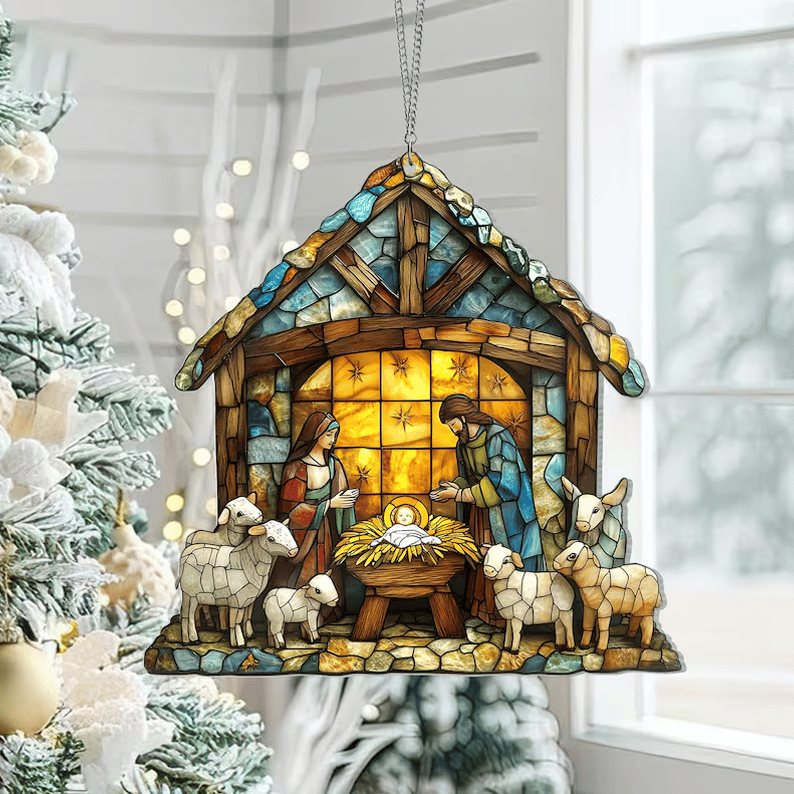
Nativity Jesus Decoration Suncatcher
A stained-glass style nativity panel for a bright window, in three sizes.
$12.99
- Free shipping over $40
- 30-day returns, label on us
- Ships in 1–2 business days
Style: Stone Stable
Size: 4 inches
- Free shipping on orders over $40
- 30-day returns, return label included
- Secure SSL checkout · PayPal accepted
- Tracked worldwide delivery
About this suncatcher
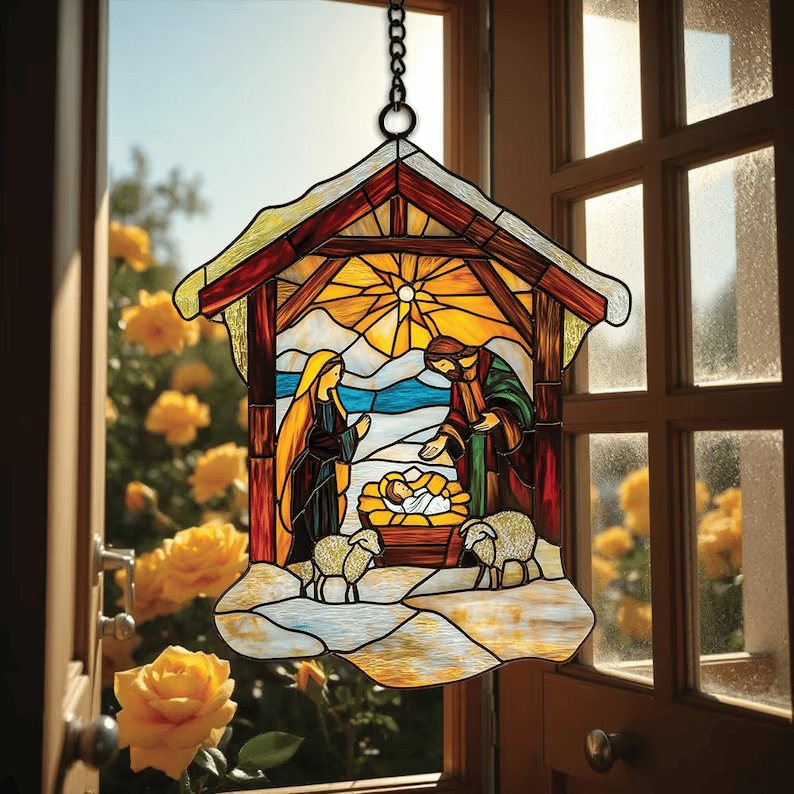
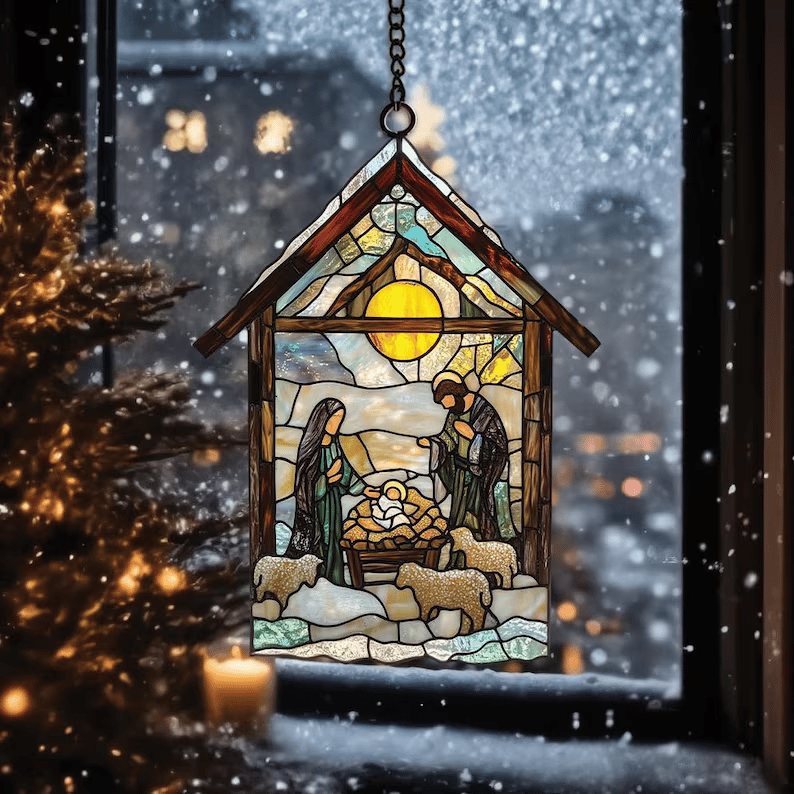
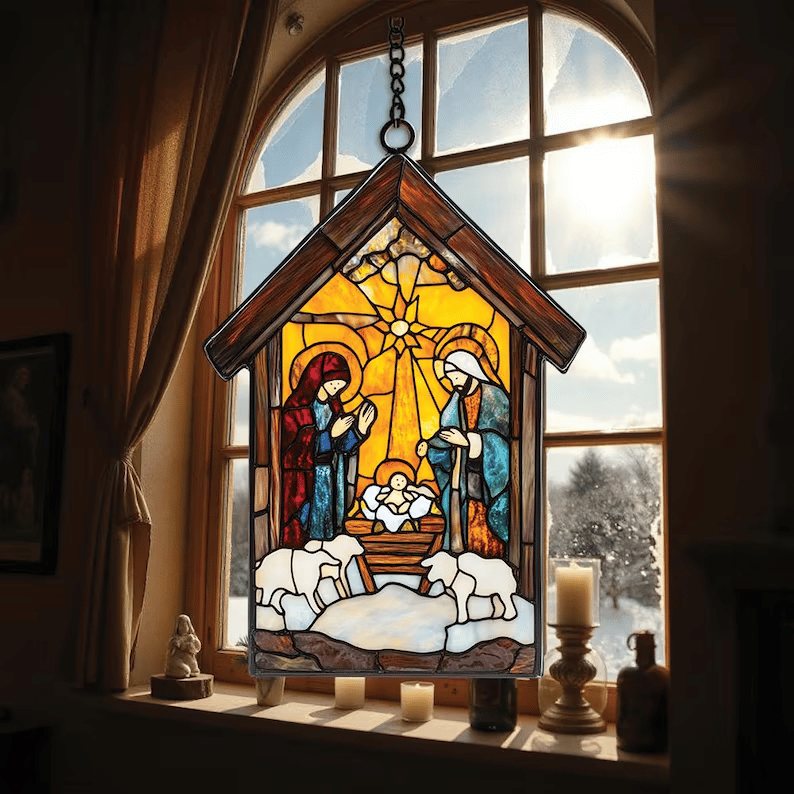
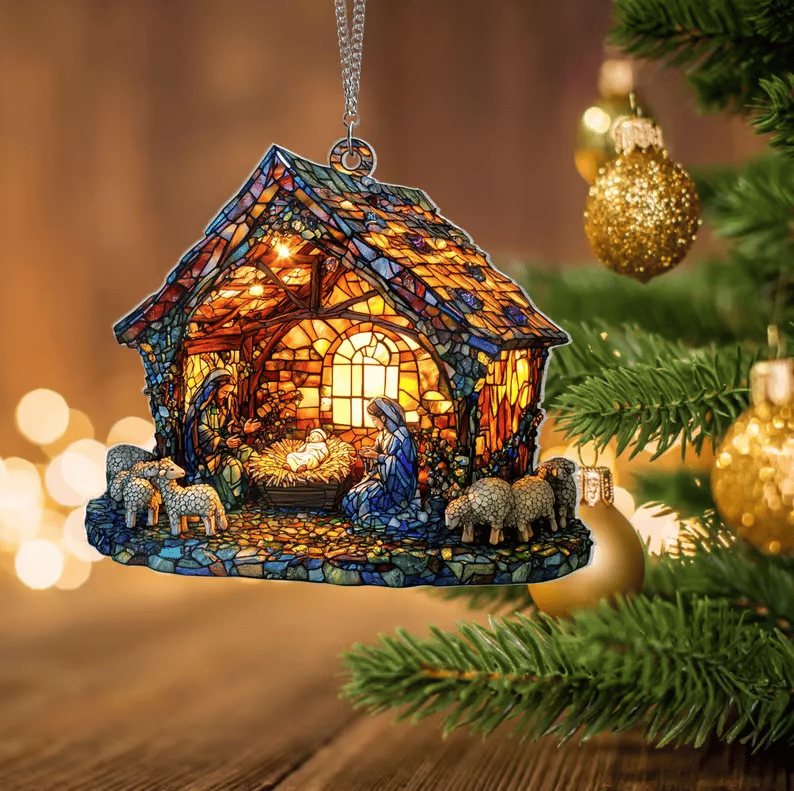
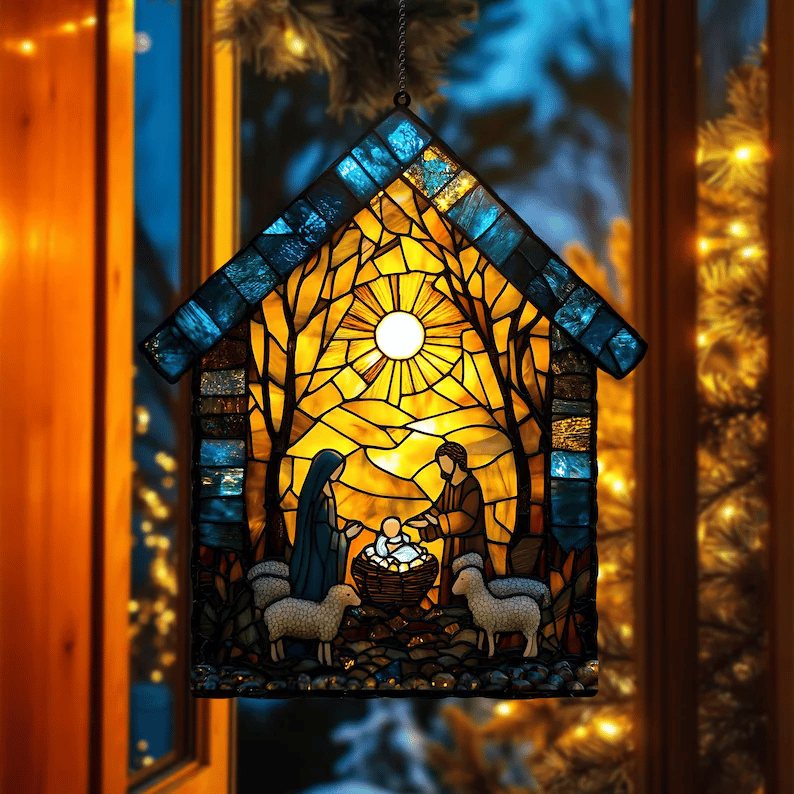
A flat acrylic panel in a stained-glass style, with the nativity scene built up from separate blocks of colour rather than painted on. Hung in a bright window, the light comes through those blocks and the picture sharpens: the amber centre, the blue accents, the stable roof above them. Without light directly behind it, it is a quiet coloured panel, which is why it wants a window rather than a wall. Six designs and three sizes.
The panel and its colours
Printed acrylic, cut to the outline of the scene rather than to a rectangle, so the shape of the stable or the rays is part of the design. The colour sits in flat separated areas the way a leaded window does, which is what gives it the stained-glass look and what makes the light do the interesting work. The surface is smooth and takes a wipe, and it is rigid rather than floppy, so it hangs flat instead of curling.
Six designs, three sizes
The six variations are mostly in the stable and the background: a stone stable, an arched roof, snow-covered timber, golden rays behind the scene, a mosaic finish, and blue stained glass. Four, eight or twelve inches across, chosen at checkout. The small one goes in a kitchen window; the large one holds a big window on its own; at Christmas a single small one among the tree lights does more than most ornaments.
Where the light is
A south or west facing kitchen window, a breakfast nook, a sunroom, a porch window, or anywhere the sun comes through at an angle for part of the day. Morning light brings out the warm tones and the amber centre; afternoon light through the cool blue panels gives the whole thing a different character. Moving it half a metre is often the difference between it looking ordinary and it doing what it was bought for.
Through the season
It is a Christmas panel but not only a Christmas one, which is the reason it goes up in November and tends to stay through January. In December it hangs near the tree or in the window with the lights; after the decorations come down it stays in the window on its own. Nothing about it is fixed to the season beyond the subject, so it holds in the window into February.
Light does the work
Flat blocks of colour rather than blended paint, so the panel changes with the light through the day.
Three sizes
Four, eight or twelve inches, from a kitchen window to one that holds a bay on its own.
Cut to the shape
The outline follows the scene instead of a rectangle, which is what makes it read as a window panel.
Specifications
| Type | Hanging suncatcher panel |
| Material | Printed acrylic |
| Sizes | 4, 8 or 12 inches across |
| Designs | Six, including stone stable, arched roof and blue stained glass |
| In the box | 1 suncatcher panel in the design and size you choose |
Putting it in a window
- Pick the window for the light
South or west facing brings out the warm tones. A window in permanent shade flattens the colour.
- Hang it in the upper half
High in the frame is where daylight is strongest and the panel is seen from the room.
- Move it before you give up on it
Half a metre along the same window often changes the whole effect.
- Leave it up
Nothing ties it to December beyond the subject, so it will carry through into January without looking odd.
In the box
- 1 printed acrylic suncatcher panel in the design and size you choose
Care
Wipe with a soft damp cloth and dry it straight away, because water marks show on flat acrylic in a bright window. Keep it out of a window that gets very hot in summer, where the panel can soften, and store it flat rather than rolled so it does not take a curl.
Where to hang it
No, it is printed acrylic. It has the look of stained glass but it is rigid, light and unlikely to break if it falls.
Four inches for a kitchen window or among tree lights, eight for a standard window, twelve for a large bay or a door where it needs to hold the space.
From the top of the panel in the window, by a hook, a suction cup or a length of thread on an existing fixing. Keep it in the upper half of the frame where the light is strongest.
Keep looking
Also on the shelf