
December Countdown
24-Day Mystery Adventure Advent Calendar Collection
Twenty-four compartments, and a story that only closes on the last day.
$29.99
- Free shipping over $40
- 30-day returns, label on us
- Ships in 1–2 business days
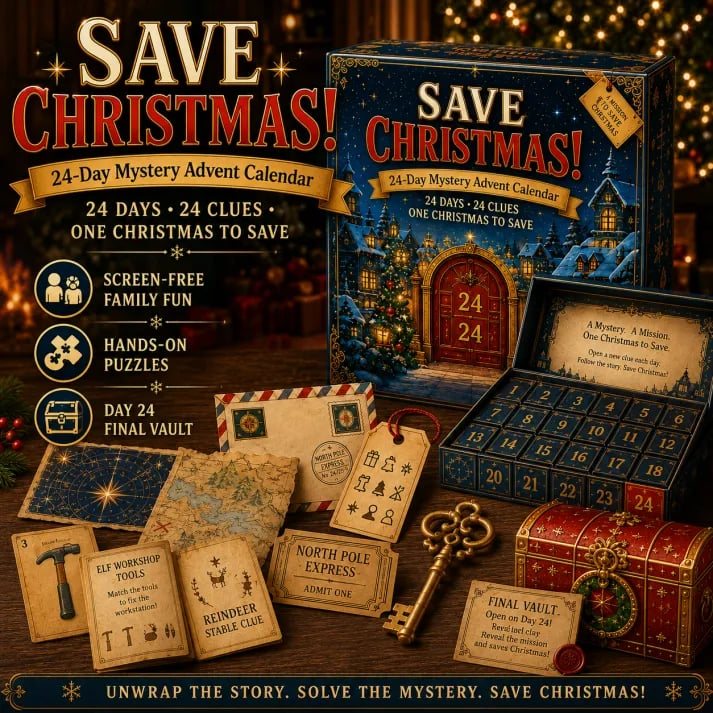
Style: Save Christmas
- Free shipping on orders over $40
- 30-day returns, return label included
- Secure SSL checkout · PayPal accepted
- Tracked worldwide delivery
About the calendar
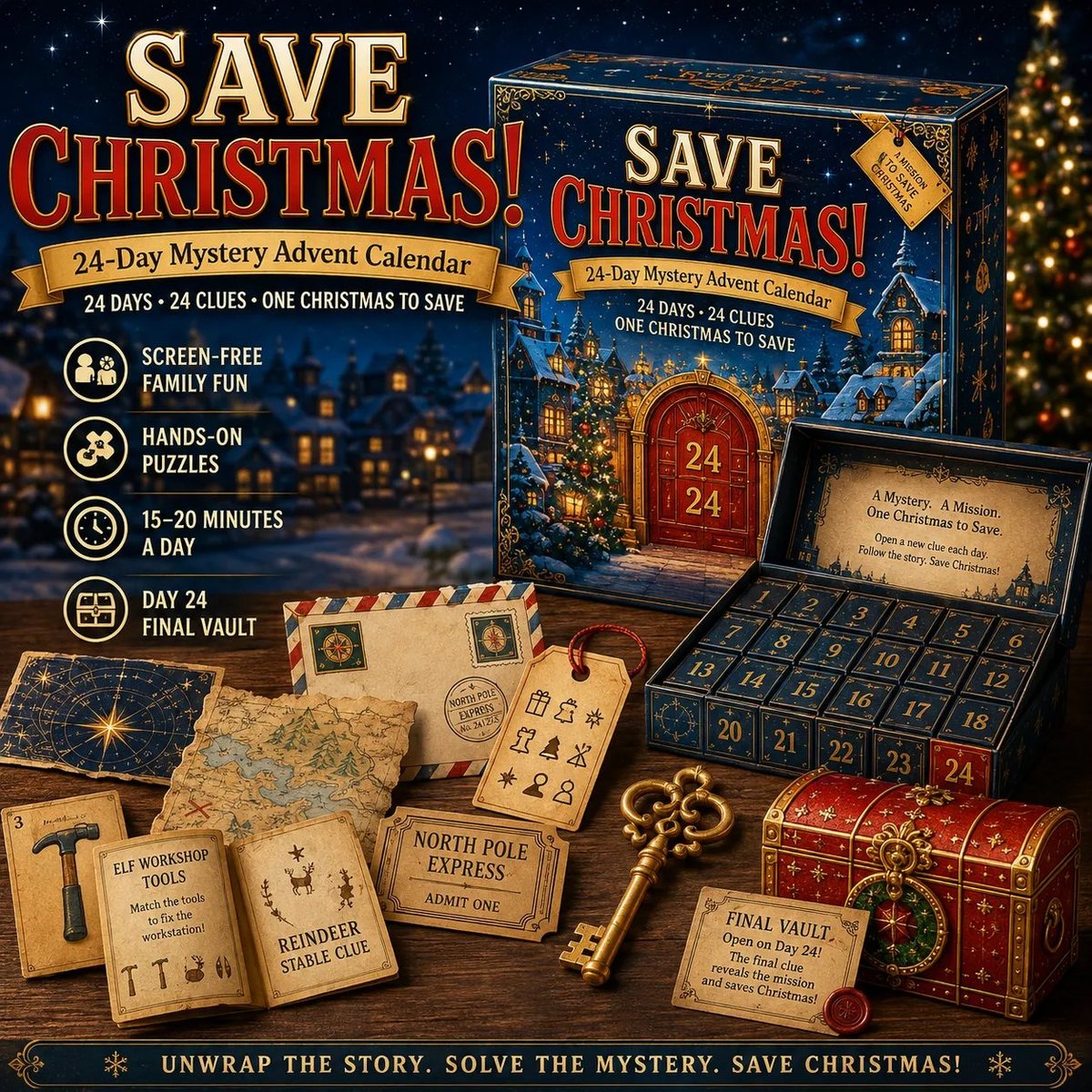
Most advent calendars are finished the moment the last door comes off. This one keeps a question open for the whole of December. Behind each numbered compartment sits a clue, a key, a folded map or a torn photograph, and what turns up on the fourth is often the piece you need on the eleventh. Nothing inside is edible. By the twenty-fourth you are holding a solved case, a completed route or a rescued Christmas, depending on the story you picked.
How the twenty-four days run
One compartment a day, and only one. The numbers are printed large enough to read from standing height, which sounds like a small thing until you have watched somebody open the wrong door and spoil a week of it. Fifteen to twenty minutes is the usual sitting. Start on the first of December or the twelfth, it makes no difference, but the days do have to stay in order because the story does.
What is behind the doors
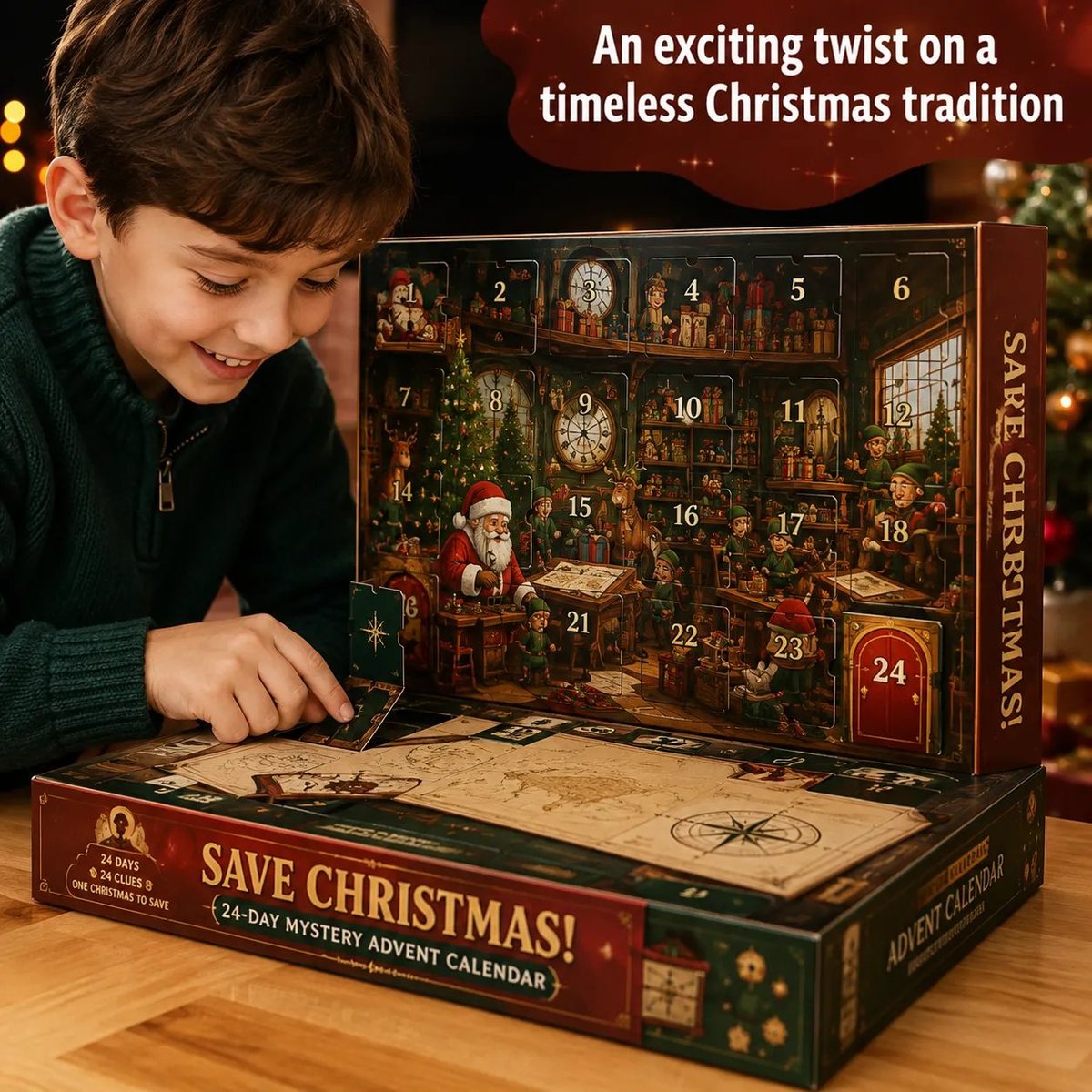
Folded maps, small keys, printed tickets, wooden tokens, letters, photographs and a decoder, with a log page for the running notes. Which of those you get depends on the theme, and each theme mixes them differently so the same trick never arrives twice in a row. These are pieces meant to be handled and then kept. A map you opened on the sixth is still part of the answer on the nineteenth.
Save Christmas, the Train, or the Case
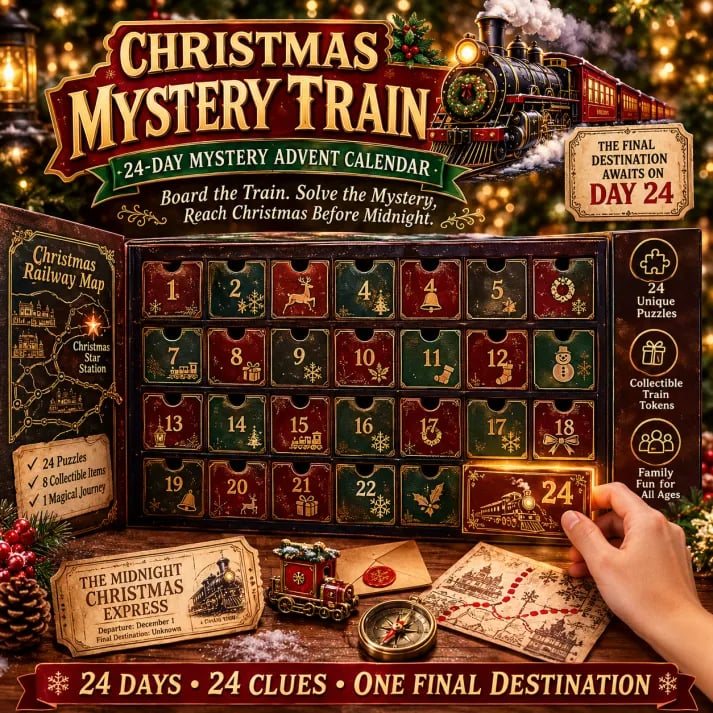
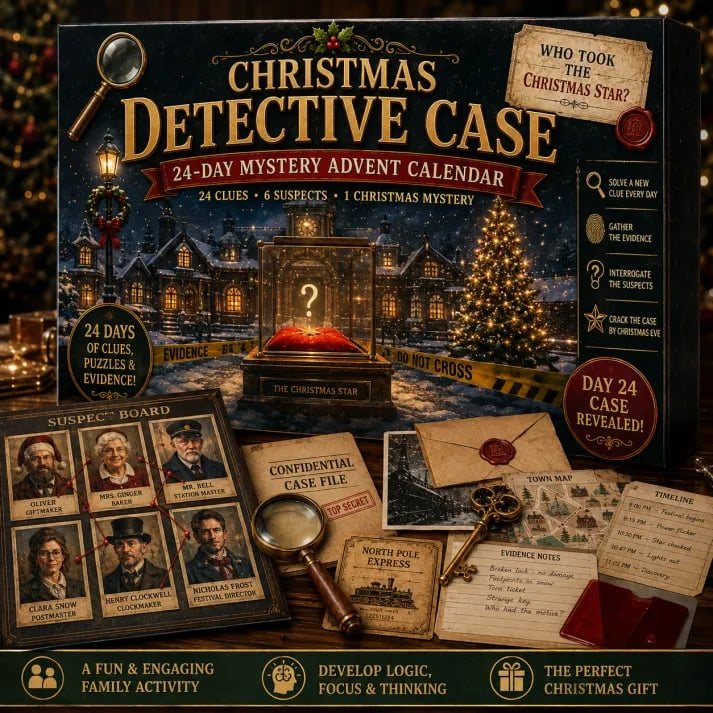
Three stories, one format. Save Christmas sends you chasing a fault through the North Pole before Christmas Eve. The Mystery Train hands you a ticket, a route and a set of passengers who are not telling you everything. The Detective Case is the slowest, built on suspects, a timeline and evidence to sort through. Each one ends differently, so there is no point asking anyone who has already played.
Playing it with other people
Two to four around a table works best, with one person holding the pen. Teenagers can run it on their own. Younger children can join for the opening and the hunt, but the decoding is pitched above them. Because everything stays out until day twenty-four, a coffee table or a sideboard becomes the game board for three weeks. Some households love that. Some find it mildly in the way.
Nothing edible
Twenty-four clues, puzzles and objects. No chocolate, so nothing to replace next year and nothing that goes stale in a warm room.
Built to last the month
The pieces are handled daily for three weeks and still have to work on day twenty-four.
Screen-free by design
Paper, card and small objects. The only thing that needs charging is whoever is doing the decoding.
Specifications
| Type | 24-day story puzzle calendar |
| Format | 24 compartments, opened one per day |
| Contents | Clue cards, folded maps, keys, tickets, tokens and a decoder |
| Each day | About 15 to 20 minutes, screen-free |
| Suited to | Families, teenagers and adults |
Getting the most out of it
- Same time each day
After dinner beats the morning rush, because nobody wants to stop halfway through a clue.
- One person reads aloud
The clue gets read once, slowly, to everybody. Repeating it usually gives the answer away.
- Keep the pieces flat
A shallow tray, or the lid of the box, stops the map pieces wandering off between days.
- Hold day 24 back
It lands better on Christmas Eve than on a Tuesday morning halfway through the month.
In the box
- 24 numbered compartments with their contents
- Folded maps, keys, tickets and tokens
- Letters, photographs and clue sheets
- A decoder and a log page
- Step-by-step instructions
Care
Paper, card and light wood, so keep it out of the damp and away from a windowsill that gathers condensation. If you plan to pass it on, put the pieces back in their own compartments as you go rather than sweeping them into a bag on the last day. The box is sturdy enough for a second December.
Before you pick a story
No. Each story has its own clues and its own ending. The daily rhythm is identical, the content is not, so two people with different calendars cannot compare answers.
Teenagers can run it alone. With younger children the opening and the searching work well, but expect to carry the decoding yourself.
Open two the next evening and do not worry about it. The story survives a missed night, though the last day is worth saving.
Keep looking
Also on the shelf