December Countdown
Cat Advent Calendar Blind Box
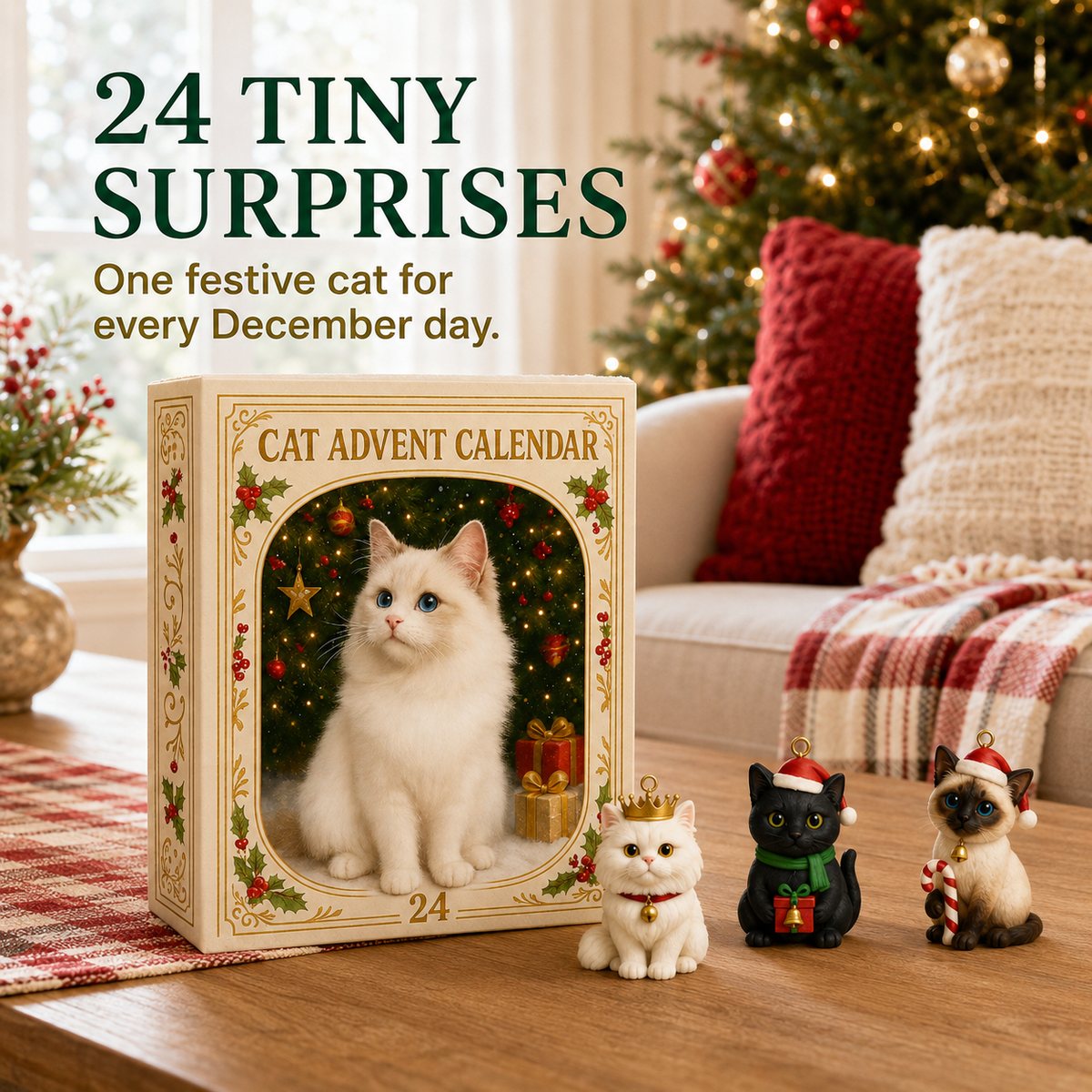
Twenty-four numbered doors, and a painted cat behind every one.
$22.99
- Free shipping over $40
- 30-day returns, label on us
- Ships in 1–2 business days
- Free shipping on orders over $40
- 30-day returns, return label included
- Secure SSL checkout · PayPal accepted
- Tracked worldwide delivery
About the box
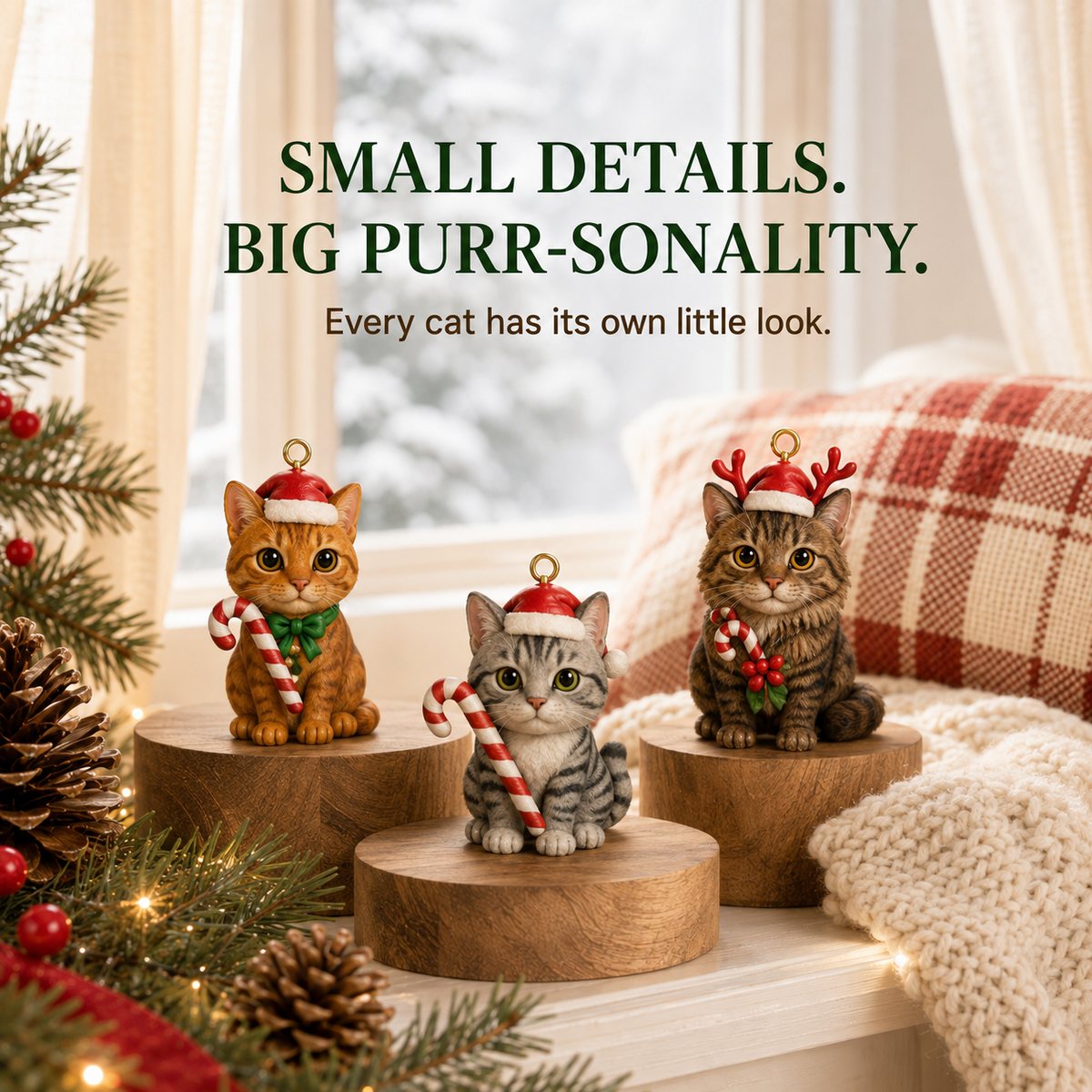
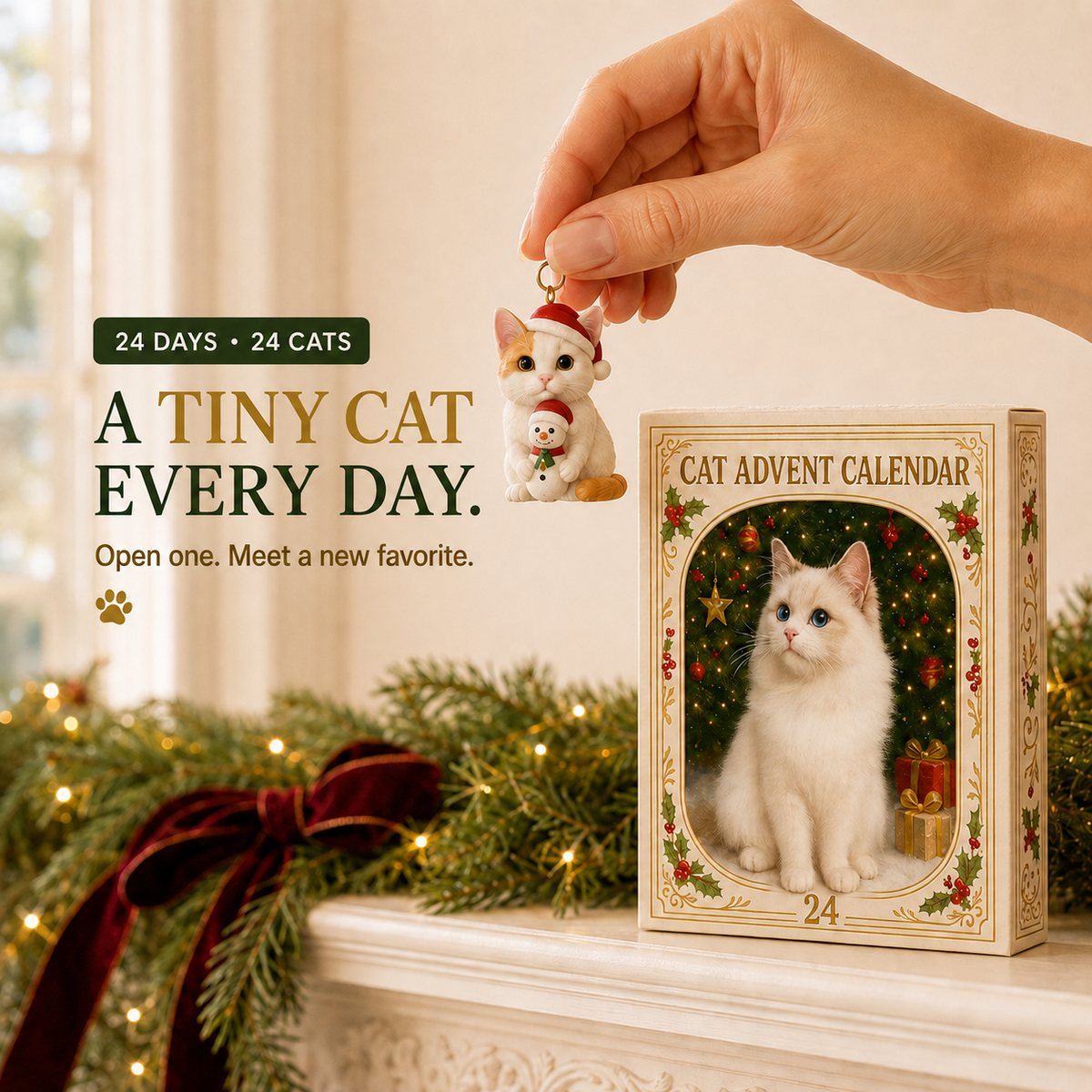
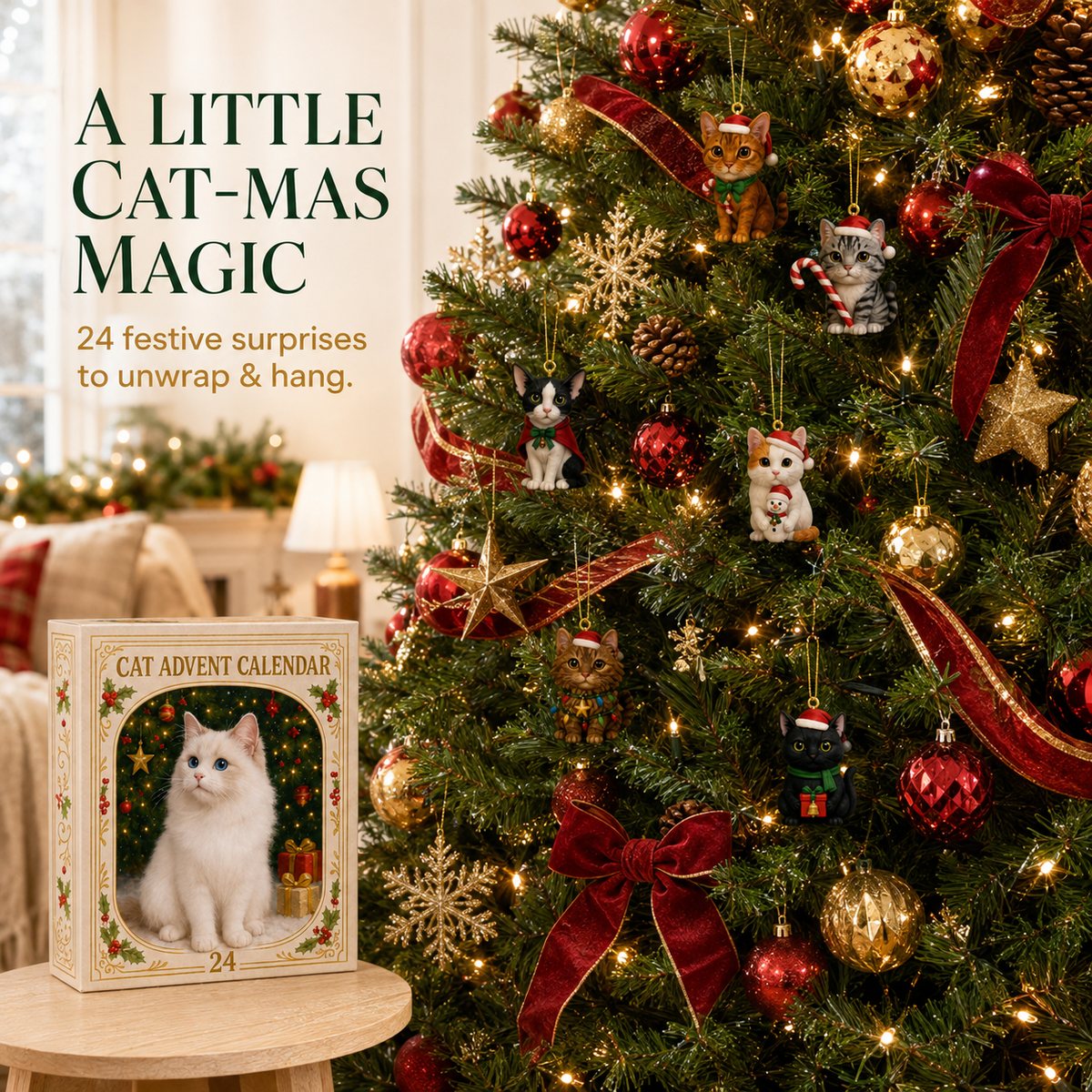
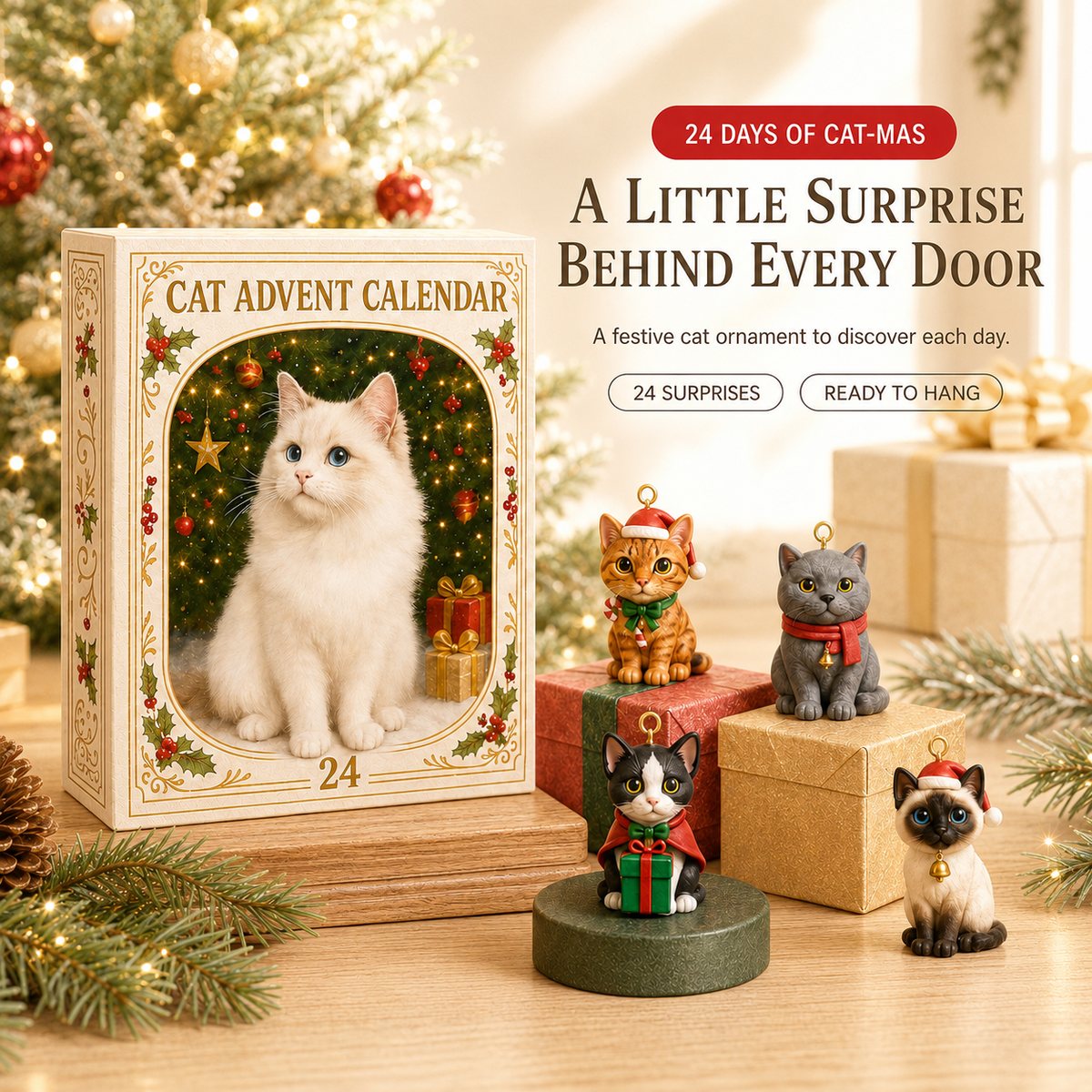
A standing box of twenty-four doors. Each one hides a small painted cat with a loop on top, ready to hang on a branch straight away. No two of them match: hats, antlers, bows, candy canes and tiny collars keep the month from repeating itself. The box empties one door at a time and the tree gains something every morning, until the twenty-fourth leaves a small colony of cats among the baubles instead of torn cardboard. That trade is the whole appeal.
The cats
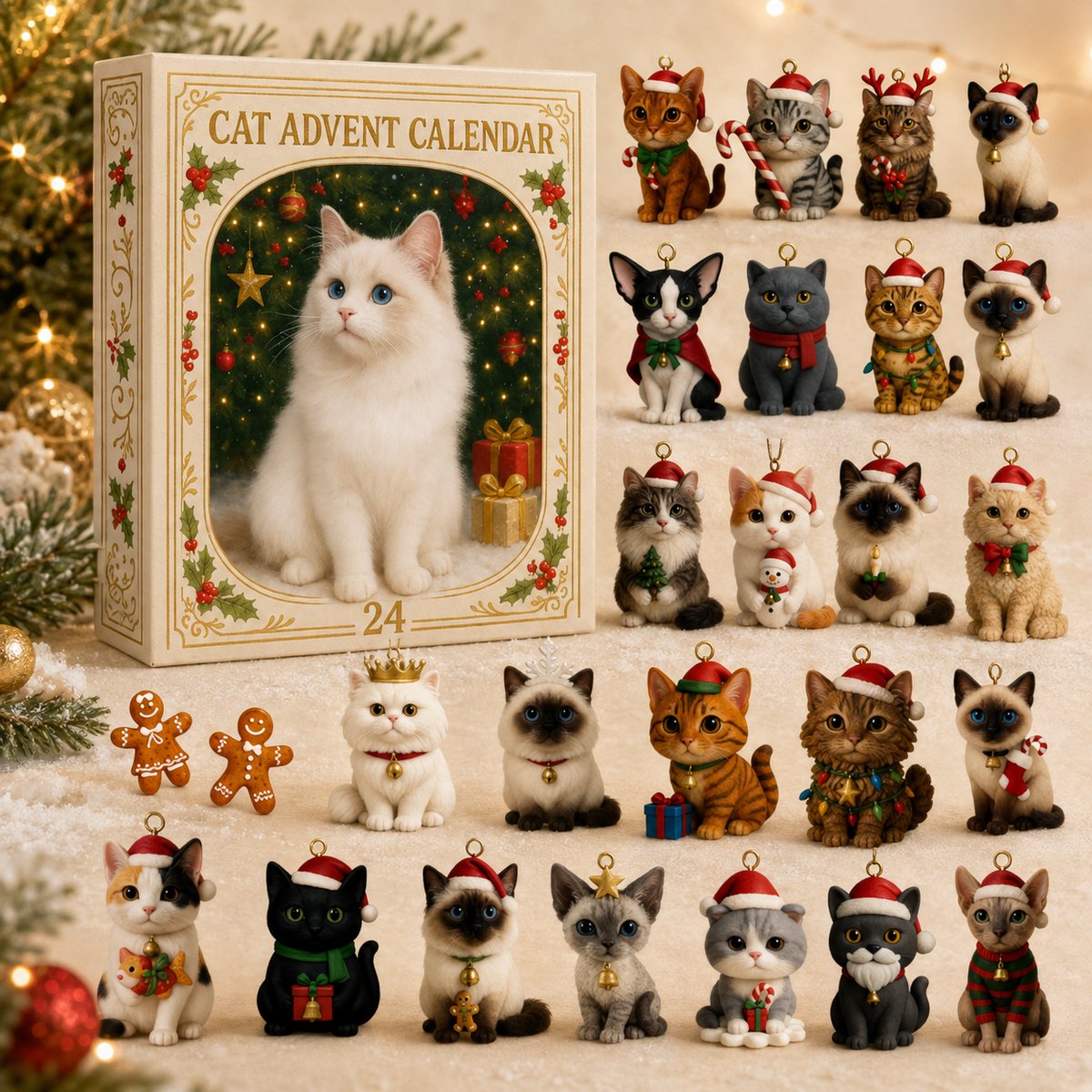
Twenty-four of them, no duplicates, each in a different outfit and each with its own hanging loop. They are about the size of a bauble, so they are made to hang and be looked at, and the paint is what a pair of small hands would ruin first. The differences live in small places: a hat worn at an angle, a scarf, a bow tied deliberately off centre. Those are the details that stop a row of two dozen cats reading as the same cat repeated.
The box
Printed card with twenty-four doors numbered one to twenty-four, made to stand on a shelf or a mantel on its own. The numbers are legible from standing height, so nobody opens two doors working out which one today was supposed to be. The doors are scored rather than sealed, so the box still looks intact in the third week, which is not something a punched-out chocolate calendar manages.
Why a blind box works here
You do not know which cat is behind today until you open it, and neither does anybody else. That small uncertainty is what makes a countdown feel like a countdown rather than a job. In practice it also means siblings cannot negotiate over who gets which one in advance, which is worth more than it sounds in a house with two children and one calendar.
Where the box lives
On a hall table, a kitchen counter, a mantel, a windowsill that is not in full sun. The box needs to stand somewhere it will be passed several times a day, because half the pleasure is opening one door on the way past. Once December is over, the cats go into the tree box with everything else and the calendar goes back on the shelf for next year.
Twenty-four different cats
No repeats across the month, so the countdown stays interesting to the last door.
Ready to hang
Every cat has a loop, so nothing has to be tied on before it goes up.
The box survives
Scored doors and printed card mean it still looks presentable in the third week of December.
Specifications
| Type | Advent calendar with 24 hanging cat ornaments |
| Format | 24 numbered doors, opened one per day |
| Behind each door | One painted cat ornament with a hanging loop |
| Designs | 24 different cats, no repeats |
| Display | Free-standing printed box, about the size of a shelf game |
Using it through December
- Open it where you pass it
A counter or hall table beats a shelf, because the ritual only works if the box is in the way.
- Straight onto the tree
Each cat has a loop, so it goes up as soon as it comes out. Nothing to attach first.
- Leave the rest closed
The discipline of an advent calendar is not opening tomorrow's door tonight.
- Gather them at the end
By Christmas Eve the collection is on the tree, and the box goes back in the cupboard.
In the box
- 1 printed advent calendar box with 24 numbered doors
- 24 painted cat ornaments, each with a hanging loop
Care
Painted surfaces, so dust them rather than washing them, and keep them out of strong light for months at a time. Hanging on a tree is fine. A box of mixed decorations is not, because paint chips where two painted pieces rub, so give them a bag of their own when the tree comes down.
Common questions
Not one of them. Each has its own outfit and its own accessories, so a month of doors never shows you the same cat twice.
Yes. The doors are scored rather than sealed and the ornaments are reusable, so it packs away and comes back out.
No. They are painted ornaments made for hanging on a tree, so they are for looking at rather than for a child to play with.
Keep looking
Also on the shelf